Maranello, now
A first electric Ferrari, the return of a legendary name and a V12 that refuses to go quietly. The new Ferraris, as I see them this autumn.
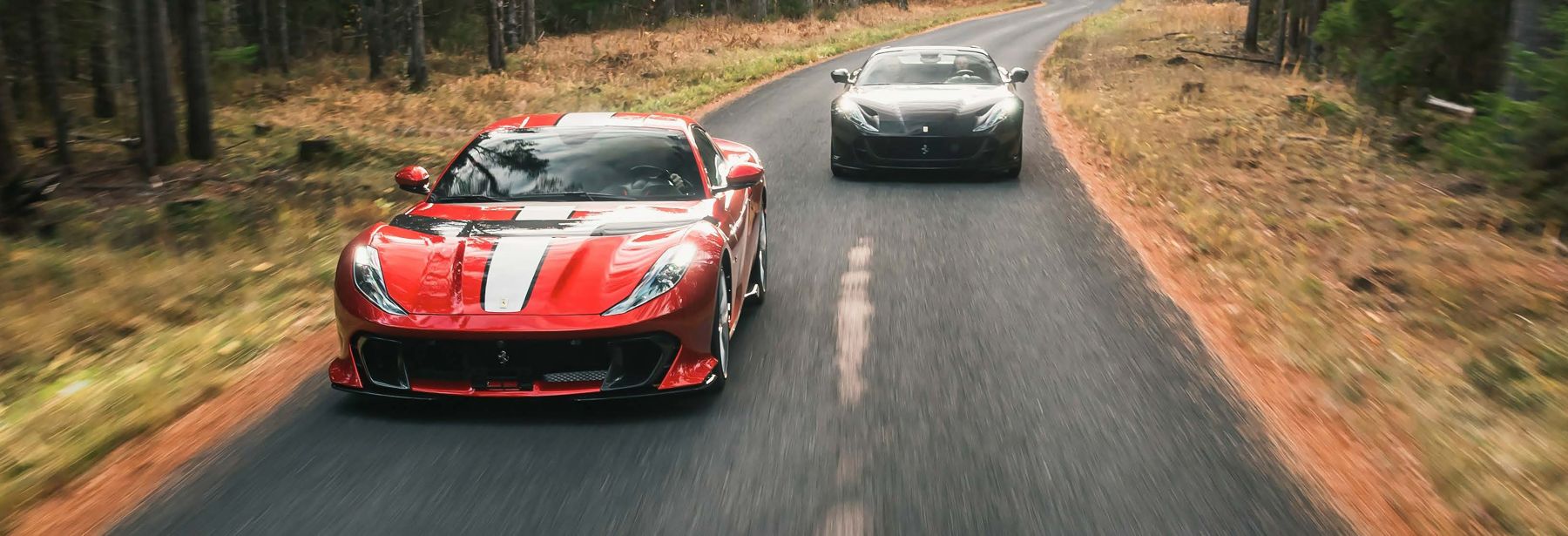
Ferrari is going through one of the most interesting chapters in its history. In the space of a year it has revealed its first fully electric car, revived one of its most famous names, softened its entry-level grand tourer into something altogether more elegant, and made it quite clear that the naturally aspirated V12 is not going anywhere. For anyone who loves these cars, it is a fascinating moment.
Luce: Ferrari goes electric
The biggest story of the year is the Luce, Ferrari’s first fully electric production car. It is a genuine departure: four doors, five seats and four electric motors, one at each wheel, producing in the region of 1,000 horsepower. The interior was designed with LoveFrom, the collective founded by Sir Jony Ive and Marc Newson, and rather than following the industry towards ever-larger screens, it blends physical and digital controls for a more tactile feel. Prices are expected to start at around €550,000 in Europe, with the first deliveries due towards the end of this year.
The design has divided opinion, particularly among traditional enthusiasts, and I understand why. But a Ferrari has never really been defined by its fuel. It is defined by whether it makes you feel something, and I am very keen to find out whether this one does.
849 Testarossa: the name returns
Few names in motoring carry more weight than Testarossa, and Ferrari has revived it for the successor to the SF90 Stradale. The 849 Testarossa pairs a 4.0-litre twin-turbo V8 with three electric motors in a plug-in hybrid producing 1,050 horsepower, enough for 0–100 km/h in 2.3 seconds and a top speed beyond 330 km/h. Available as a coupé and as a Spider with a retractable hardtop, it is one of the most technically advanced road cars Ferrari has ever built.
Amalfi: the elegant one
The Amalfi replaces the Roma, and for me it may be the most appealing car in the range. It is a more understated Ferrari, conceived as a beautiful grand tourer rather than an uncompromising supercar. Its 3.9-litre twin-turbo V8 produces 640 horsepower, reaching 100 km/h in 3.3 seconds and going on to around 320 km/h, and the new Spider makes it a wonderful car for the coast. If I were choosing a Ferrari for two days on the roads between Maranello and Monaco, this is the one I would want.
12Cilindri: keeping the V12 alive
For traditional enthusiasts, the 12Cilindri is perhaps the most important car Ferrari makes. Its naturally aspirated 6.5-litre V12 produces around 830 horsepower and celebrates the mechanical character that made the marque famous, in sharp contrast to the sophistication of the hybrids. For serious collectors, a front-engined, naturally aspirated V12 remains hugely significant, and Ferrari knows it.
“A Ferrari has never really been defined by its fuel. It is defined by whether it makes you feel something.”
Three futures at once
What strikes me most is that Ferrari is not choosing one path. The company plans to launch an average of four new models a year through to 2030, and expects its range by then to be split roughly 40% combustion, 40% hybrid and 20% fully electric. Its e-building in Maranello builds all three. Ferrari believes different customers want different kinds of Ferrari, and it is managing to develop radically different technologies without losing its identity.
A relationship, not a purchase
The most interesting change may have little to do with the cars themselves. Owning a Ferrari is increasingly about the relationship: invitation-only driving events, time at the factory, personalisation and the chance to be offered the rarest limited editions. It is a world built on access and shared experience, which is precisely why Maranello makes such a compelling starting point for the journeys we create at ÅUREN.